Reviewed September 21, 2026 against City and County sources. Confirm hours before you drive.
- 1Sort batteries by type (alkaline, lithium, NiCd, auto). Tape the terminals. Bag a leaking cell by itself.
- 2Keep fluorescent tubes and CFLs whole. Do not crush them. Incandescent bulbs can go in the trash if wrapped against shards.
- 3City residents: HHW Transfer Facility by appointment, or one of eight City battery-and-bulb collection events each year.
- 4County residents can drop household batteries at many San Diego County Library branches. Confirm at WasteFreeSD.org.
Batteries are hazardous waste in California
The City of San Diego states that all types of batteries are hazardous waste in California. They can contain cadmium, lead, lithium, mercury, nickel, silver, and zinc. State universal-waste rules have barred household batteries from landfill trash since February 9, 2006. That includes alkaline AA cells, rechargeable tool packs, button cells, and automotive batteries. They do not go in the gray, blue, or green cart.
Store used batteries dry, out of reach of children, sorted by chemistry, in a zip bag or lidded plastic container. Tape the terminals. A damaged or leaking battery goes in its own bag, isolated from the rest. Swollen or reacting lithium packs are specifically not accepted at the HHW window until they are stable — call 858-694-7000 if you have a reacting cell.
Drop-off: the City HHW Transfer Facility accepts home-use and automotive batteries by appointment. The City also runs eight one-day battery and bulb collection events in spring and fall. County materials note free household-battery recycling at 16 San Diego County Library branches. Auto-parts stores that sell vehicle batteries usually take the old one back; ask at purchase. WasteFreeSD.org lists additional sites.
Lamps, LEDs, and what a junk truck will not take
City guidance: all lamps and bulbs other than incandescent require proper disposal because of mercury and other metals. Fluorescent tubes, CFLs, and LEDs are accepted at the HHW facility by appointment and at the eight one-day collection events. Incandescent bulbs do not contain those toxics and may go in regular trash if you wrap the glass. DTSC publishes handling notes for broken fluorescents — ventilate, do not vacuum mercury powder, and treat the debris as HHW.
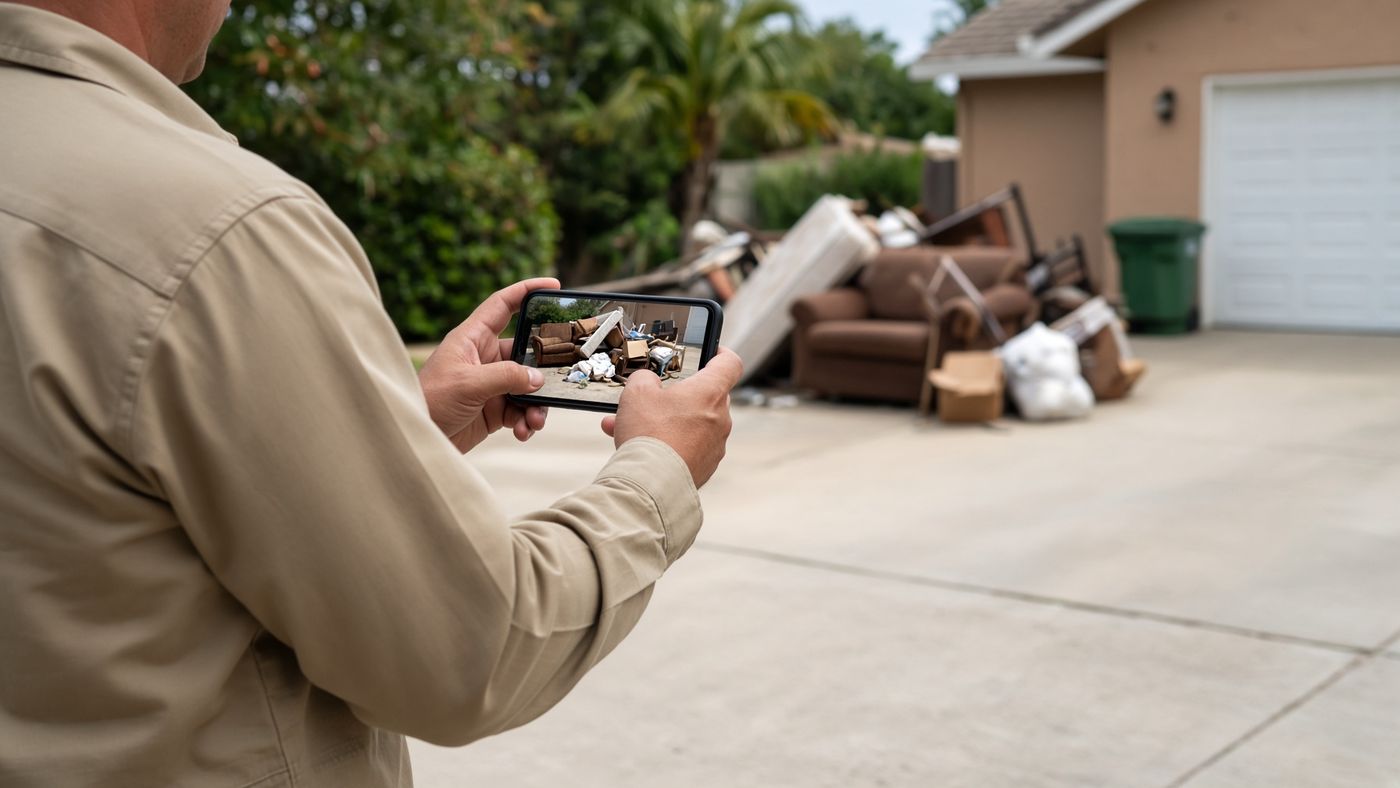
Do not toss button batteries or CFLs in a junk pile “because they are small.” They start fires in packer trucks and contaminate recycling. Fred’s Junk Removal will not take loose batteries, fluorescent tubes, or leaking cells. We will haul lamps with the fixture if the bulb is an ordinary incandescent already removed, and we will haul the furniture around the utility closet. Pull the universal waste, drop it at HHW or a collection event, and text a photo of the rest.
Official sources
Fred’s does not haul this material. Use the official drop-off above. We will still take the rest of the pile — text a photo of the non-hazardous junk.